Best connected option: Hume Pod 2.0. Best for waist changes: a tape measure. Best for weight trends: a standard digital scale. Best for manual skinfold tracking: calipers. The right DEXA scan alternative for home use in 2026 depends on what you want to follow; none replaces a medically indicated scan.
- Hume Pod 2.0 is the best connected DEXA scan alternative for home use here, with core tracking requiring no subscription.
- A tape measure tracks waist size, not body fat percentage or bone density.
- A standard digital scale suits weight tracking; skinfold calipers require more technique.
- Home body composition tracking supports habit decisions, not diagnosis or a replacement for prescribed DEXA scans.
What makes the best home DEXA alternative in 2026?
- Relevant measurements: The tool answers your actual question.
- Repeatable routine: You can use it under similar conditions.
- Clear limitations: Estimates stay separate from clinical measurements.
- Useful tracking: Results help you review habits over time.
- Manageable technique: Taking a reading does not become a chore.
Home DEXA alternatives at a glance
| Option | Best for | What it tracks |
|---|---|---|
| Hume Pod 2.0 | Connected body-composition tracking | Body-composition estimates in the companion app |
| Tape measure | Waist-size changes | Body circumference |
| Standard digital scale | Weight trends | Total body weight |
| Skinfold calipers | Practiced manual tracking | Skinfold thickness at selected sites |
The ranking separates connected tracking, circumference, weight, and manual skinfold assessment. These are different jobs, not four ways to obtain the same result. Choose the measurement you can interpret and repeat rather than expecting every option to produce a comparable body-fat percentage.
1. Hume Pod 2.0: best for connected body-composition tracking
Hume Pod 2.0 is an at-home body-composition analyzer paired with the Hume Health app. It fits readers who want body-composition information in a connected tracking routine rather than a notebook of isolated measurements. Core app tracking requires no subscription; premium coaching and deeper personalized analysis are optional paid upgrades.
The practical question is not whether a home reading matches a DEXA report digit for digit. It is whether your ongoing record helps you understand body changes and review your habits without treating every fluctuation as a result.
For example, a change in body weight raises a question rather than settling it. Body-composition tracking gives you additional information to review alongside your activity, eating patterns, and strength-training routine. It does not establish the cause of a change or confirm that a particular habit worked.
Hume Pod 2.0 highlights
- Provides a connected option specifically for home body-composition tracking.
- Includes core app tracking without a required subscription.
- Fits a broader record of body changes and daily habits.
Best for: Adults who want connected body-composition tracking and a record they can review over time.
Keep the purchase decision focused. If you only want to know whether your waist measurement changes, a tape measure answers that question more directly. Hume Pod 2.0 belongs on your shortlist when body-composition tracking itself is the priority.
2. Tape measure: best for tracking waist-size changes
A tape measure records circumference at a chosen body location. For waist tracking, it answers a plain question: is your waist measurement changing under a consistent measuring routine? It does not calculate body composition by itself.
This is the strongest manual choice when your concern is how your midsection changes rather than obtaining a body-fat estimate. Record the measurement location and keep the tape level, with consistent tension. A different position or a tighter pull can change the reading without a meaningful body change.
Tape measure highlights
- Measures circumference directly rather than estimating it from another signal.
- Requires no app or account.
- Lets you focus on one clear measurement.
Best for: Adults who mainly want a repeatable record of waist-size changes.
Use the result to review the broader pattern, not to grade a meal or workout. A single measurement is a snapshot. If your readings seem inconsistent, check your technique before changing your routine.
A tape measure also fits readers who prefer a private written log over another connected device. That preference is a valid reason to choose it. The trade-off is that you must record and interpret the measurements yourself.
3. Standard digital scale: best for straightforward weight trends
A standard digital scale measures body weight. It is the clearest option when you want to follow weight without additional body-composition estimates or app features. Place it on a firm, level surface and follow its instructions for repeatable use.
Body weight includes more than body fat. Water, food, and digestive contents contribute to the reading, so a change does not automatically mean fat gain or loss. That distinction matters when you are deciding whether your habits need adjustment.
Standard digital scale highlights
- Gives a direct body-weight reading.
- Keeps the tracking routine simple.
- Works for readers who do not want body-composition estimates.
Best for: Adults whose main goal is a consistent body-weight record.
A standard scale fits better than a connected analyzer when extra measurements would create confusion rather than useful decisions. You do not need a body-fat estimate to keep a weight log. You do need to understand that weight alone cannot describe every body change.
If tracking your weight increases distress or drives restrictive behavior, reconsider whether this measurement belongs in your routine. A device is useful only when the information supports sensible decisions; collecting more readings is not automatically better.
4. Skinfold calipers: best for practiced manual tracking
Skinfold calipers measure the thickness of pinched skinfolds at selected body sites. Published equations use those measurements to estimate body fat. The estimate depends on the measurement method, the equation, and the person taking the readings.
This option suits someone willing to learn a defined protocol and repeat it carefully. It is less suitable if you want a quick, low-effort check or cannot reliably reach the required measurement sites.
Skinfold caliper highlights
- Provide a manual method for following selected skinfold measurements.
- Require no connected app.
- Support a repeatable protocol when the measurer has the necessary skill.
Best for: Readers comfortable learning measurement technique, ideally with qualified instruction.
Do not combine measurements from different protocols into one trend line. Changing the sites, equation, or person taking the readings changes the method, making comparisons harder to interpret.
Calipers are not the default recommendation for a beginner who simply wants to understand body changes. A tape measure is easier to interpret for circumference, and a connected analyzer better fits someone seeking app-based tracking. Choose calipers because you want the manual method, not because the final percentage looks precise.
How to make home readings useful
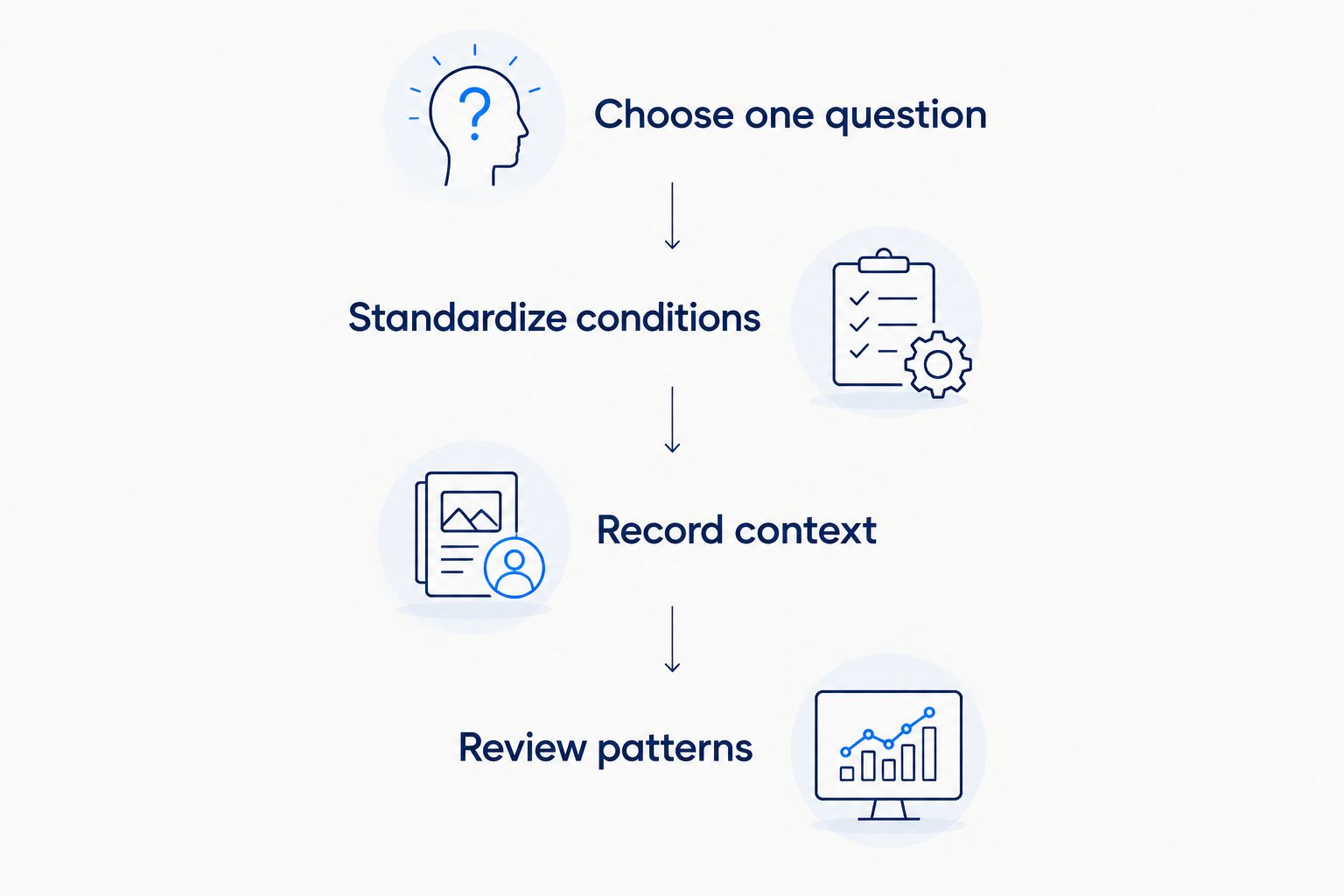
A home tracking routine works best when you control the process before interpreting the result. Use these steps with the measurement tool you choose.
Choose one question
Start with a specific question: are you following weight, waist size, or estimated body composition? Write it down before deciding which device to use. This prevents an unrelated measurement from becoming the main focus just because an app displays it.
Standardize conditions
Follow the device's instructions and measure under similar circumstances. For body-composition tools that use bioelectrical impedance, hydration and recent activity can affect estimates. For a tape measure, placement and tension matter; for calipers, the site and technique matter.
Do not try to correct an unexpected reading by repeatedly measuring until you get a preferred result. Check the setup instead. A consistent method produces a more interpretable record than a collection of selectively chosen readings.
Record context
Keep short notes about meaningful routine changes, such as a different training schedule or disrupted sleep. Context helps you ask better questions about a trend, but it does not prove cause and effect.
Review patterns
Look for a sustained direction rather than reacting to a single reading. If an unexpected change persists or comes with symptoms, discuss it with a healthcare professional instead of trying to diagnose it through a consumer device.
For your 2026 tracking plan, change the routine only when the information supports a clear decision. An isolated body-composition estimate is not a reason to overhaul your eating or exercise habits.
Where sleep and activity tracking fit
Sleep and activity tracking answer different questions from body-composition measurements. They provide context about your routine, not a substitute estimate of body fat or bone density. Keep those roles separate when choosing equipment.
Hume Band 2.0 is a health-tracking wearable that works on its own; Hume Pod 2.0 is optional. The Hume Health app brings body-composition and wearable insights together, but you do not need both devices to start tracking.
Choose Hume Band 2.0 when sleep, activity, strain, and recovery trends are your main interest. Choose Hume Pod 2.0 when home body composition is the main question. Buying both is not a requirement, and a wearable does not replace a body-composition assessment.
How these options rank for 2026
This ranking prioritizes the question each option answers, the effort required, and the limits of its measurements. Hume Pod 2.0 leads for connected body-composition tracking, while the manual and weight-only options earn separate recommendations for narrower tasks.
This is a comparison of everyday uses, not a head-to-head accuracy test. Hume Pod 2.0 and DEXA use different methods, so their results should not be treated as interchangeable.
Which home DEXA alternative should you choose?
Choose Hume Pod 2.0 if you want connected body-composition tracking with included core tracking and no required subscription. Choose a tape measure for waist changes, a standard scale for weight, or calipers only when you want a technique-dependent manual method.
For 2026, start with the smallest setup that answers your question. If a clinician has recommended DEXA for bone health or another medical reason, keep that appointment; none of these home options supplies an equivalent assessment.
FAQ
What's the best DEXA scan alternative for home use?
Hume Pod 2.0 is the best connected option in this guide for home body-composition tracking. A tape measure fits waist tracking better, while a standard digital scale suits weight-only tracking.
Can a home body-composition analyzer replace a DEXA scan?
A home body-composition analyzer does not replace a medically indicated DEXA scan. Home estimates and clinical scan results use different methods and should not be treated as interchangeable.
Can I measure bone density with a smart scale?
A smart scale does not provide a clinical bone-density assessment. A displayed bone-related estimate is not equivalent to the bone mineral density measured during a clinical DEXA examination.
Does Hume Pod 2.0 require a subscription?
Hume Pod 2.0's core app tracking does not require a subscription. Premium coaching and deeper personalized analysis are optional paid upgrades.
Do I need Hume Pod 2.0 to use Hume Band 2.0?
Hume Band 2.0 works on its own, and Hume Pod 2.0 is optional. Choose the wearable for sleep, activity, strain, and recovery trends rather than as a replacement for body-composition measurement.
Is a tape measure better than a body-composition analyzer?
A tape measure is better suited to the specific question of waist circumference. A body-composition analyzer serves a different purpose by providing body-composition estimates, so neither measurement replaces the other.
Why do home body-fat readings change between measurements?
Home body-fat estimates can change with measurement conditions as well as actual body changes. Hydration and recent activity affect bioelectrical impedance estimates, which is why following the device's instructions and comparing consistent readings matters.
One last thing
A more detailed number is not necessarily a more useful answer. Before adding another metric, finish this sentence: knowing this trend will help me decide whether to change ____. If you cannot name the decision, keep your setup simpler.
The strongest home routine is one you can repeat, understand, and put in perspective. It supports your judgment rather than replacing it.